Ship Your SaaS in Public: The 12-Week Revenue-First Build System
Ship a revenue-generating micro-SaaS in 12 weeks without wasting months building in the dark. You will validate demand before coding, pre-sell to your first customers during development, and launch with built-in distribution through a repeatable system for marketing, shipping, and accountability.

You've spent months building side projects nobody wanted, watching your graveyard of half-finished repos grow while your peers are hitting their first $5K MRR. The problem isn't your code--it's that you're building like an engineer when you need to be shipping like a founder who gets paid first, builds second. This 12-week system shows you exactly how to pre-sell your SaaS before writing production code, so you'll never waste another weekend building something the market doesn't want.
What Students Say
Hear from learners who have completed this course:
Tomás R.
Operations Manager at a logistics company (career-switching to indie SaaS)
I’d been “building” a route-optimization tool on weekends for 6 months and still had zero users. Section 2 (Idea Validation Without Code) forced me to stop coding and actually test demand. I used the buy-trigger interview script and the pain-mapping worksheet with 14 dispatch managers and found the real problem wasn’t routing—it was proof-of-delivery reconciliation. In Section 3, I followed the pre-sell mechanics (the one-page offer + Stripe payment link) and sold 9 annual plans at $240 each before writing the MVP. The Build the Revenue MVP module helped me ship a simple Next.js app with auth, a Postgres table for uploads, and subscriptions—nothing fancy, but it works. I launched with a small email list from Section 5 and hit $1.7k MRR within 7 weeks of finishing the course. The biggest change for me was learning to validate and sell first instead of hiding behind code.
Read more
Adaeze O.
Freelance Product Designer (B2B SaaS)
As a designer, I was great at wireframes but terrible at shipping and distribution. The 12-week shipping plan in Section 1 made me commit to weekly deliverables in public, and the accountability structure stopped me from endlessly polishing. Section 5’s “Distribution Built In” was the turning point: I used the landing page SEO checklist to rewrite my page around a single query (“client onboarding checklist”) and then repurposed the Twitter thread template into three posts that actually drove signups. During Section 6 (Private Beta), I set up an activation checklist and a feedback loop using short in-app prompts—my beta users went from ‘looks cool’ to sending me screenshots of their workflows and feature requests I could act on. My micro-SaaS now consistently gets 8–12 qualified leads/week, and I’ve converted 23 of them into paid users at $29/month. I’m still designing, but now I’m also shipping and selling—without feeling gross about it.
Read more
Noura A.
Data Analyst at a healthcare nonprofit
I built internal dashboards for years but had never launched anything public. Section 2 helped me validate a micro-SaaS idea without code by focusing on ‘pain + urgency + budget.’ I interviewed clinic administrators and discovered they’d pay for automated monthly compliance reminders, not another analytics tool. In Section 4, the walkthrough on subscriptions and basic data modeling was exactly what I needed—I implemented Next.js, simple role-based auth, and Stripe billing in a weekend instead of getting stuck in tutorials. The Launch Week Playbook (Section 7) gave me a concrete plan: I prepared a Product Hunt page, reached out to two niche communities, and pitched a partnership with a small healthcare newsletter using the press angle framework. Result: 312 waitlist signups, 41 beta users, and 18 paying customers in the first month. I’m now at ~$2.3k MRR and, more importantly, I have a repeatable system to keep improving retention using the Section 8 support/upsell scripts.
Read more
Course Overview
Ship a revenue-generating micro-SaaS in 12 weeks without wasting months building in the dark. You will validate demand before coding, pre-sell to your first customers during development, and launch with built-in distribution through a repeatable system for marketing, shipping, and accountability.
Section 1: Revenue-First Foundations and Your 12-Week Shipping Plan
Set the rules of engagement: pick a narrow target customer, define the revenue-first constraints, and set up a weekly cadence that forces progress even with 10-15 hours per week. You'll also create your public build narrative so marketing starts on day one.
Learning Outcomes:
- Define a clear revenue target, timeline, and scope that prevents overbuilding
- Create a weekly execution plan (learn, implement, ship, reflect) you can sustain alongside a full-time job
- Set up your build-in-public system (accounts, content cadence, proof collection, and weekly ship posts)
You are here because you are tired of the "side project graveyard." You know the place--it is that folder on your local machine or the list of private repositories on GitHub filled with half-finished apps, brilliant ideas that fizzled out, and code that never saw a single paying user.
As a developer, your instinct is to solve problems with code. When you have an idea, you spin up a new Next.js repo, configure Tailwind, spend a week agonizing over the database schema, and maybe another two weeks building a robust authentication system. By the time you are ready to show it to anyone, three months have passed, your motivation has waned, and you realize you have built a solution for a problem nobody is willing to pay to fix.
This course flips that script. We are moving from Code-First to Revenue-First.
In this section, we are setting the rules of engagement. You cannot build a profitable business in 10-15 hours a week if you play by the same rules as a venture-backed startup with a team of twenty. You need a guerrilla strategy. You need constraints.
The Revenue-First Mindset
The primary reason technical founders fail is not technical incompetence; it is a lack of market validation. According to CB Insights, 42% of startups fail simply because there is "no market need." For developers, this number is likely higher because we are capable of building things without needing anyone's permission or funding.
To break this cycle, we must adopt a new rule: Revenue is the only form of validation.
Likes on Twitter are vanity. GitHub stars are vanity. Even free users are often a vanity metric. Until someone pulls out a credit card, you do not have a business; you have a hobby.
Key Insight: Do not write a single line of production code until you have defined exactly who is paying you and why. Your goal for the first 4 weeks is not to build a product, but to build a waiting list of buyers.
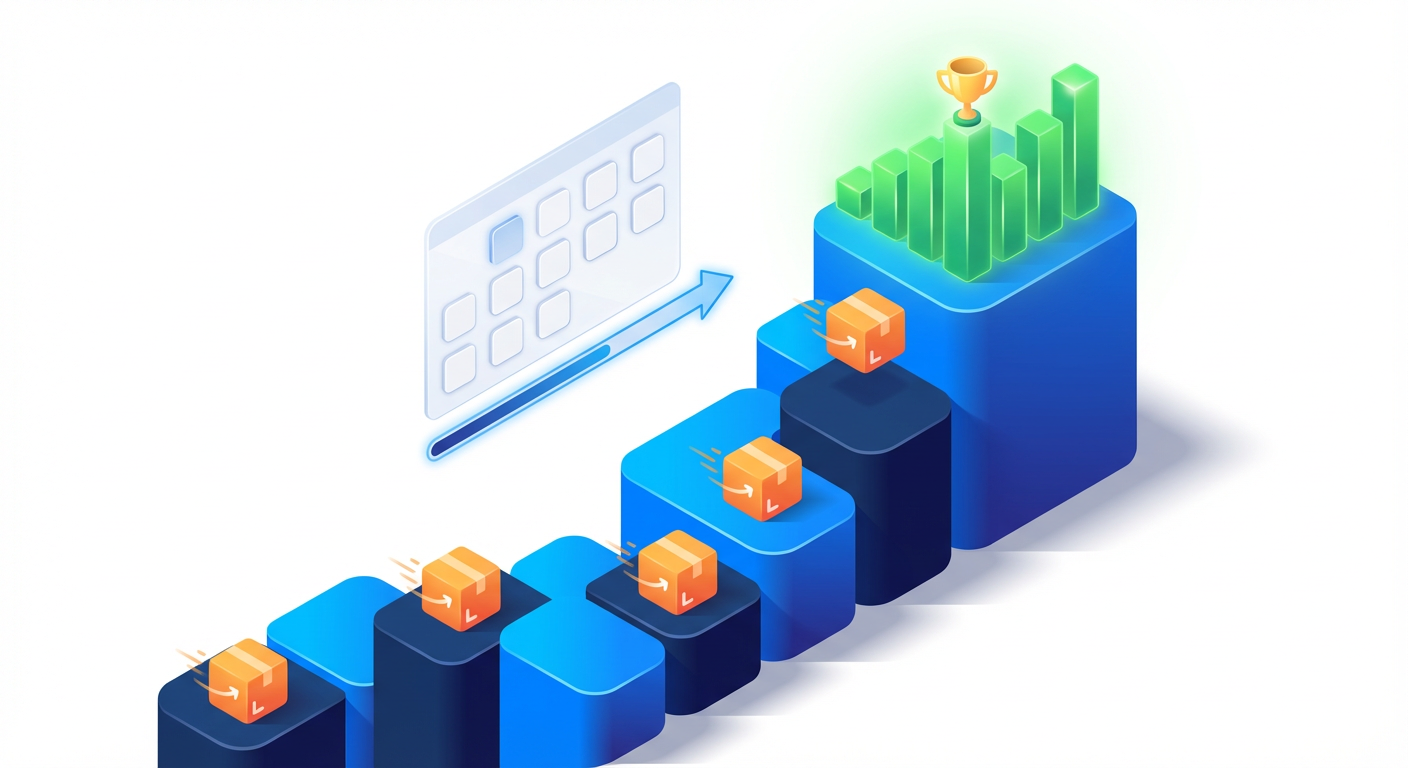
Setting Your Constraints: The "Box"
To ship in 12 weeks while working full-time, you must operate within a strict "Box." If your idea does not fit in the box, you must cut features until it does.
1. The Narrow Target
You cannot build "project management software." That puts you in competition with Asana and Jira. You must build "project management software for boutique architectural firms."
Pick a target audience you already understand or have access to. If you are a frontend developer, build for other frontend developers. If your spouse is a lawyer, build for small law firms. The narrower the niche, the easier the marketing.
2. The 12-Week Deadline
Parkinson's Law states that work expands to fill the time available. If you give yourself a year, you will take a year. We are giving you 12 weeks.
- Weeks 1-4: Validation, Audience Building, and Pre-selling
- Weeks 5-8: The Ugly MVP (Minimum Viable Product) Build
- Weeks 9-12: Launch, Onboarding, and Iteration
3. The Tech Stack Cap
This is not the time to learn Rust or to experiment with a new graph database. You will use the "Boring Stack." Use whatever language and framework you use at your day job. If you know React and Node, use that. The customer does not care if your backend is messy or if you are using a monolith instead of microservices. They care if the problem is solved.
Pro Tip: If a feature takes more than 4 hours to build, ask yourself if it is essential for the first paying customer. If the answer is "no," put it in the backlog. Authentication, billing, and core value are the only essentials.
The Weekly Execution System
You have 10-15 hours a week. If you rely on "finding time" when you feel motivated, you will fail. You need a rigid system that separates "thinking" from "doing."
We split the week up to prevent context switching. Context switching is fatal when you have limited hours.
The Full-Time Founder Schedule:
| Day | Focus | Activity |
|---|---|---|
| Monday | Strategy & Learning | Watch course content, plan the week's sprints, write marketing copy. No coding. |
| Tuesday | Deep Work (Code) | 2-3 hours of focused development on the single most important feature. |
| Wednesday | Deep Work (Code) | 2-3 hours of focused development. |
| Thursday | Deep Work (Code) | 2-3 hours of focused development. |
| Friday | Ship & Publicize | Deploy what you have (even if broken). Write your weekly "Build in Public" update. |
| Weekend | Rest or Spillover | Optional 2-3 hours if behind, but prioritize rest to prevent burnout. |
Notice that Monday is for strategy. Do not code on Mondays. Monday is for deciding what to code so that on Tuesday at 7:00 PM, when you are tired from your day job, you don't have to think--you just execute.
Building Your Public Narrative
Marketing is usually the technical founder's weakness. We will solve this by not "doing marketing" in the traditional sense. Instead, you will Build in Public.
Building in public provides three massive benefits:
- Accountability: It is harder to quit when 500 people are watching.
- Feedback Loop: You get immediate correction if you are building the wrong thing.
- Launch Velocity: By the time you launch in Week 12, you will have an audience that has been following the journey, ready to buy.
You do not need to be an "influencer." You just need to be a documentarian.
Your Narrative Strategy:
- The Zero-to-One Arc: Position yourself as the underdog solving a specific problem. "I am a senior engineer tired of X, so I am building Y to fix it in 12 weeks."
- Radical Transparency: Share the wins, but also share the bugs, the rejected designs, and the struggle. This builds trust. People buy from humans, not faceless brands.
Important: Your first "ship" happens this week. It won't be code. It will be your declaration of intent. You will post on LinkedIn or Twitter/X defining your goal and your timeline. This effectively burns the boats; you can't turn back without public embarrassment.
Your Week 1 Deliverables
We are not just reading; we are shipping. By the end of this week, you must complete the following:
- Define Your Hypothesis: Write down exactly who your customer is, what specific pain point you are solving, and how much you intend to charge (aim for roughly $29-$49/month for B2B Micro-SaaS).
- Block Your Calendar: Negotiate time with your spouse or family. Block out the 10-15 hour schedule shown above. Treat these blocks as immutable meetings.
- The "Hello World" Post: Post your intent on your social platform of choice. State the problem you are solving and the 12-week deadline.
Coming Up Next: Idea Validation
Now that we have established the rules and the schedule, we have to ensure you are building the right thing. In Section 2, "Validation Without Code," we will cover how to verify your idea before you open your IDE. You will learn the "Smoke Test" method to get strangers to commit emails and even credit cards to a product that doesn't exist yet.
Prepare to be uncomfortable. We are going to talk to humans before we talk to computers.
Section 2: Idea Validation Without Code (Demand, Pain, and a Buy Trigger)
Validate that a real buyer exists and will pay before you write production code. You'll run lightweight customer research, extract the language customers use, and test willingness to pay with a landing page and outreach.
Learning Outcomes:
- Identify a specific market slice with urgent pain, a clear buyer, and budget
- Conduct fast customer discovery (interviews, DMs, forums, job posts, reviews) and synthesize patterns into a one-sentence positioning statement
- Validate demand with a landing page test and outreach plan that produces signups or sales conversations in the first week
Stop. Close your IDE.
If you are like most technical founders, you have a terminal window open right now. You are itching to run npx create-next-app because writing code feels productive. It feels like work. It feels safe.
But in Section 1, we established the Revenue-First mindset: Code is a liability until it solves a verified problem.
Every line of code you write before you have a customer is technical debt. It is a feature you will likely have to delete later. In this section, we are going to do the uncomfortable work that separates successful indie hackers from the ones who maintain a graveyard of side projects.
We are going to validate that a human being exists who has a painful problem and is willing to open their wallet to solve it. We will do this without writing a single line of production logic.
The "Migraine vs. Headache" Framework
Most developers build vitamins (nice-to-haves) rather than painkillers (need-to-haves). To get to $5,000 MRR quickly, you cannot afford to build vitamins. You need to find a migraine.
A migraine is a problem so acute that the customer is actively looking for a solution right now. They have already tried to solve it with Excel sheets, Zapier hacks, or virtual assistants, and they are frustrated.
To identify a migraine, you must slice the market thin. A common mistake is targeting "freelancers." That is not a market; that is a demographic.
Bad Market Slice: Time tracking software for remote workers. Good Market Slice: Automated billing and time-tracking for DevOps consultants billing by the hour who lose money due to context switching.
Key Insight: If you can't name the specific job title of your buyer and the specific subreddit or Slack community where they hang out, your market slice is too broad.
The Extraction Phase: Customer Discovery
You are not "pitching" an idea yet. You are an investigator extracting data. Your goal is to get the potential customer to complain about their workflow.
If you mention your solution too early, they will lie to you. They will say, "That sounds great," to be polite, and then they will never buy. This is the "False Positive" trap.
Instead, use this 3-step extraction script via DM or email:
- The Hook: Mention you are researching their specific industry problem.
- The Ask: 15 minutes of their time (not to sell, but to learn).
- The Anti-Pitch: Explicitly state you have nothing to sell yet.
Sample Outreach Script: "Hey [Name], I see you're managing a team of frontend devs. I'm researching how engineering managers handle vague ticket requirements from product teams. I'm not selling anything, just trying to understand the workflow pain points. Would you be open to a 10-min chat? I'm happy to share my findings with you after."
Once you are on the call or in the DMs, look for specific language patterns.

As illustrated above, your goal is to bridge the gap between a vague idea and a confirmed "Buy Trigger." You are looking for the exact words they use to describe their pain.
- Do they say "It's annoying"? (Headache - Ignore)
- Do they say "it costs me 5 hours a week" or "I hate this process"? (Migraine - Pursue)
Positioning: The "One-Sentence" Test
Before you build a landing page, you must synthesize your research into a positioning statement. This will become your headline.
Formula:
[Product Name] helps [Target Audience] solve [Specific Pain] by [Mechanism] so they can [Desirable Outcome].
Example: Cronitor helps backend developers solve silent cron job failures by providing instant alerts and tracking so they can sleep without worrying about missing data backups.
If you cannot fill in these brackets clearly, you do not have a product yet. You have a hunch. Go back to the extraction phase.
The Smoke Test: Landing Page and The Buy Trigger
Now, we build. But we are not building the SaaS. We are building the Offer.
You need a simple, high-converting landing page. You can code this in plain HTML/CSS, use a template in Next.js, or use a builder like Carrd. The tech stack does not matter here; the copy matters.
Your landing page needs three specific elements to serve as a valid test:
- The Promise (Headline): Use the outcome from your positioning statement.
- The Proof (Mechanism): A mock-up, a diagram, or a Loom video showing how it would work. This can be Figma screenshots or even a "Wizard of Oz" demo where you manually do the work behind the scenes.
- The Buy Trigger (CTA): This is critical. A "Join Newsletter" button is weak validation. You need strong validation.
Hierarchy of Validation Signals:
| Signal Strength | Action | Meaning |
|---|---|---|
| 🔴 Weak | "That sounds cool" | Polite lie. Zero value. |
| 🟡 Moderate | Email Waitlist Signup | Interest, but no skin in the game. |
| 🟢 Strong | "When can I try it?" | Deeply interested. |
| 🔵 Gold Standard | Pre-order / Deposit | Actual validation. You have a business. |
Pro Tip: If you aren't ready to take payments (Stripe), use a "Fake Door" test. Put a "Get Early Access - $29/mo" button on the page. When they click it, show a modal: "We are launching in 3 weeks. You've qualified for a 50% lifetime discount. Enter your email to claim it." If nobody clicks the pricing button, you know they won't pay.
Execution: Your Outreach Plan
You cannot rely on SEO in week one. You need to drive traffic manually.
- Direct Sales: Message the 10-20 people you interviewed. Send them the link. "Based on our conversation, I designed this solution. Is this what you had in mind?"
- Community "Building in Public": Post your problem and solution in the specific communities you identified. Do not spam. Ask for feedback on the concept.
- Reddit: "I'm building a tool to stop X for [Job Title]. Roast my landing page."
- Twitter/X: Tag people who talk about this problem.
The Go/No-Go Decision
Set a hard metric for this week. For example: "I need 20 qualified email signups (people who clicked the pricing button) or 2 pre-sales."
If you hit the number: Proceed to build. If you miss the number: Pivot the offer. Do not change the code (because you haven't written any). Change the headline, the audience, or the price, and test again.
What You'll Build On
This validation phase is the foundation for the entire 12-week sprint.
- In Section 3 (The MVP Stack): We will take this validated feature list and map it to a rigid tech stack (Next.js/Supabase) to ship the v1 in 14 days.
- In Section 4 (Automation): We will automate the manual onboarding you are doing now.
- In Section 6 (Scale): We will turn those manual DMs into a scalable content engine.
But remember: Advanced scaling tactics are useless if nobody wants the core product.
Summary Checklist for This Week
- Identified a "Migraine" problem for a specific job title.
- Conducted 5-10 DM conversations or interviews.
- Wrote a One-Sentence Positioning Statement.
- Launched a focused landing page with a "Buy Trigger" (Pricing click or Pre-sale).
- Drove 50+ targeted visitors to the page via manual outreach.
You have permission to code only after you have the permission of the market. Once you have those emails or pre-sales, the fear of "wasting time" vanishes. You aren't guessing anymore; you're fulfilling an order.
In the next section, we open the editor. We will look at the "Speed-to-Deploy" Tech Stack--the exact boilerplate and architecture decisions to move from this landing page to a working SaaS in under two weeks.
Ready to build what sells? Let's move to Section 3.
Course Details
- Sections8 sections
- Price$9.99