From Zero to AI Agency Owner: Launch and Scale Your First AI Service Business in 60 Days
Launch a real AI service business in 60 days without needing to be a senior engineer or relying on freelance platforms. You'll pick a profitable niche, build 3-5 client-ready AI solutions with a minimal modern stack, and use a proven outreach and sales system to land your first clients and reach $5K in monthly recurring revenue with scalable, retainable offers.
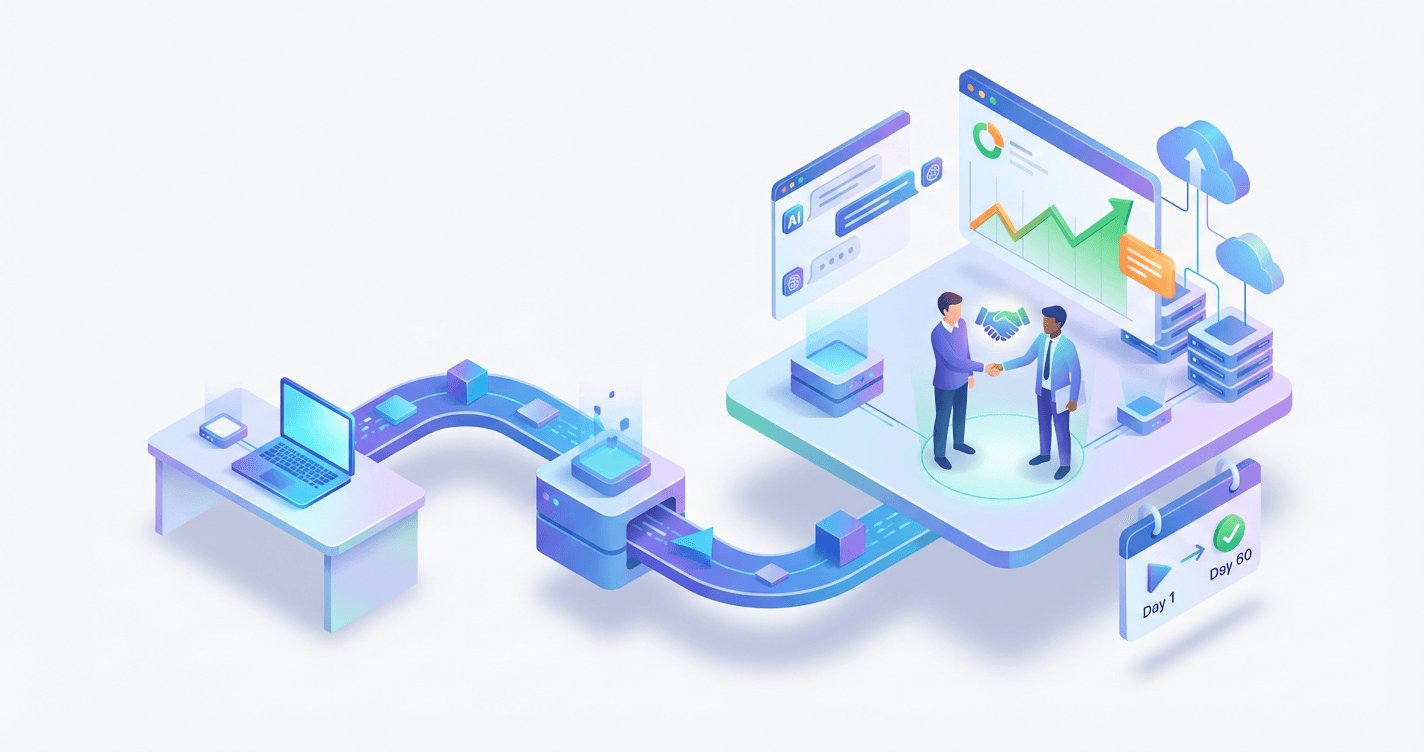
While everyone's debating whether AI will take their job, a small group of technical entrepreneurs is quietly building six-figure agencies by solving real business problems with AI--and they started just 60 days ago with nothing but a laptop and basic prompt engineering skills. The opportunity window is still open, but it's closing fast as more people realize that businesses will pay premium rates to someone who can actually implement AI solutions rather than just talk about them.
What Students Say
Hear from learners who have completed this course:
Tomás R.
Former B2B SaaS Account Executive → AI Agency Owner (Retail Ops Automation)
I came in with sales experience but zero confidence on the technical side. Section 2 (Niche Selection) helped me stop chasing “any business that needs AI” and commit to retail operations teams—specifically inventory and customer support workflows. In Section 4, the minimal stack approach was the unlock: I shipped three client-ready solutions (an FAQ/RMA chatbot, an email triage + tagging system, and a weekly sales/stock report generator) without turning this into a science project. The biggest impact was Section 3’s offer engineering. I repackaged what I built into a single retainable offer (“Ops AI Care Plan”) with clear deliverables and usage limits, instead of one-off projects. Within 7 weeks I closed two clients at $2.5K/mo each, so I hit the $5K MRR target faster than I thought was realistic. The course basically turned my ‘cool demos’ into something buyers could actually approve.
Read more
Priya V.
Operations Manager (Healthcare Clinic Network)
I’m not an engineer—I manage ops across five clinics—and I took this because I was tired of waiting on vendors for every tiny automation. Section 1’s market reality/mindset piece was surprisingly helpful because it made me focus on solving specific, measurable pain rather than “implementing AI.” From Section 4, I built a patient intake summarizer and a no-show follow-up workflow using the minimal modern stack the course recommends. Section 6 (Delivery + Client Success) gave me an onboarding checklist and success metrics, which I used internally like I was my own client. Concrete results: our front-desk team is spending about 6–8 fewer hours per week on manual intake notes, and follow-up messages go out same-day instead of piling up for days. I also used Section 7’s risk management basics to set boundaries around PHI and write a simple internal policy for what data can/can’t be used. That alone reduced a lot of anxiety and made leadership comfortable letting us expand the automations.
Read more
Yuki T.
Freelance Brand Designer → Productized AI Content Ops Studio
I was already freelancing, but my income was lumpy and I hated selling one-off deliverables. Section 3 on pricing for recurring revenue completely changed how I package my work—I built a monthly subscription around “content repurposing + approval-ready drafts” instead of per-post pricing. Section 5 (Sales System) was the most practical part for me: the targeted outreach templates and discovery call structure made sales feel like a process, not a personality contest. I used the positioning framework from Section 2 to focus on B2B podcasters and webinar-heavy founders. For the build side (Section 4), I put together a workflow that turns a webinar recording into: (1) a blog outline, (2) 8–12 social posts, and (3) a short newsletter draft, with a review layer so quality stays consistent. In 60 days I signed three retainer clients at $1.8K–$2.2K/mo each. The biggest improvement is stability: I’m now planning my month around a predictable delivery cycle (Section 6), and I’m not scrambling for new projects every week.
Read more
Course Overview
Launch a real AI service business in 60 days without needing to be a senior engineer or relying on freelance platforms. You'll pick a profitable niche, build 3-5 client-ready AI solutions with a minimal modern stack, and use a proven outreach and sales system to land your first clients and reach $5K in monthly recurring revenue with scalable, retainable offers.
Section 1: The 60-Day Blueprint, Mindset, and Market Reality
You'll reverse-engineer what a $5K MRR AI agency actually looks like: offers, deliverables, timelines, and what clients pay for. This section sets ethical guardrails, removes imposter syndrome traps, and turns "AI interest" into a clear execution plan you can follow alongside a full-time job.
Learning Outcomes:
- Translate the $5K MRR goal into weekly activity targets (pipeline, calls, proposals, delivery capacity).
- Identify the difference between "AI demos" and "business outcomes" clients will pay for.
- Set your agency operating rules: scope boundaries, promise language, and risk management to avoid overpromising.
Most people fail at starting an AI agency because they treat it like a technical hackathon rather than a service business. They spend three months perfecting a complex LangChain agent that no one asked for, only to realize they have zero distribution and no paying clients.
This section is about inverting that process. We are not here to build "cool tech." We are here to build a $5,000 Monthly Recurring Revenue (MRR) infrastructure.
For many of you holding down full-time roles in tech, product, or marketing, $5K MRR is the specific "freedom number" that replaces a salary or creates the runway to leave. But $5K is an abstract goal. To achieve it in 60 days, we must break it down into simple mechanics: pricing, volume, and hours.
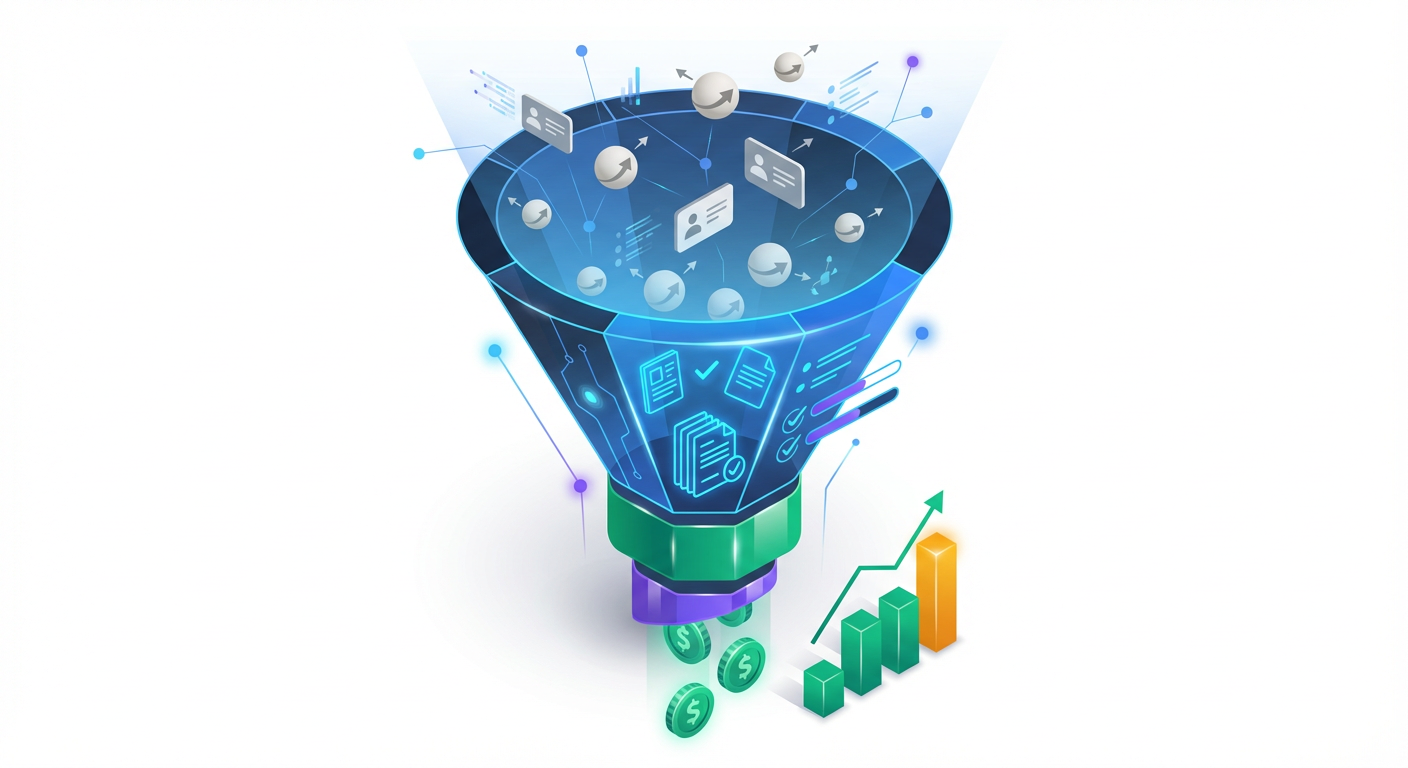
The Math: Reverse-Engineering $5K MRR
The biggest misconception in the agency space is that you need high volume to succeed. When you are balancing a full-time job, volume is actually your enemy. You cannot manage 20 clients paying $250/month. You need high-leverage relationships.
To hit $5,000/month, you do not need to be a mass-market provider. You only need one of the following combinations:
| Model | Client Count | Price Per Client | Feasibility w/ Full-Time Job |
|---|---|---|---|
| The Volume Trap | 10 Clients | $500/mo | Low. High churn, high support volume, constant sales pressure. |
| The Mid-Tier | 4 Clients | $1,250/mo | Medium. Manageable if systems are automated. |
| The Specialist | 2 Clients | $2,500/mo | High. Deep focus, higher value deliverable, manageable relationships. |
Your goal in this course is the Specialist Model. You only need two "Yes" decisions to replace a significant portion of your income.
Key Insight: Clients do not pay $2,500 for a prompt. They pay $2,500 for a business outcome that saves them $5,000 in labor or generates $10,000 in revenue. If you charge premium rates, you must solve expensive problems.
Demos vs. Outcomes: What Clients Actually Buy
You likely have technical skills--perhaps you know Python, have played with OpenAI's API, or understand n8n webhooks. The danger is falling in love with the tool. A client running a real estate brokerage or a dental practice does not care about your tech stack.
The "AI Demo" Pitch (Fails): "I can build you a chatbot using GPT-4 and a vector database that uses RAG to query your documents." Client hears: Risk, complexity, "I don't understand this," expense.
The "Business Outcome" Pitch (Sells): "I will install a system that instantly answers tenant questions 24/7, schedules maintenance requests automatically, and reduces your property manager's email volume by 60%." Client hears: Time savings, cost reduction, peace of mind.
Clients pay for the gap between where they are (overworked, chaotic) and where they want to be (efficient, profitable). AI is simply the bridge.
Pro Tip: Never mention the specific technology in your headline offer. The technology is the "how." The sale happens on the "what."
The 60-Day Execution Timeline
To go from zero to revenue while working 9-5, you need a strict diet of activity. We strip away everything that isn't revenue-generating. No fancy logo design, no complex website, no business cards.
Phase 1: Foundation & Validated Offer (Days 1-14)
- Goal: Select a specific niche and a single painful problem to solve.
- Activity: Market research, competitor analysis, and crafting your "Mechanism of Action."
- Deliverable: A clear offer statement and a list of 50 qualified leads.
Phase 2: The MVP Build (Days 15-30)
- Goal: Create a demonstrable solution that solves that specific problem.
- Activity: Building a functional prototype (not a perfect product) using low-code tools or scripts.
- Deliverable: A 3-minute Loom video showing the problem being solved in real-time.
Phase 3: Pipeline & Outreach (Days 31-45)
- Goal: Get your offer in front of the market.
- Activity: Cold outreach via email/LinkedIn using your MVP as the hook.
- Target: 10-15 outreaches per day (takes 45 minutes).
- Deliverable: 3-5 Sales Calls booked.
Phase 4: Closing & Delivery (Days 46-60)
- Goal: Secure the first retainers and deploy.
- Activity: Conducting discovery calls, sending proposals, and onboarding.
- Deliverable: $3,000 - $5,000 in booked revenue.
Operating Rules and Ethical Guardrails
Starting an agency often triggers Imposter Syndrome. You might think, "Who am I to charge this much? I'm not an AI researcher."
You do not need to be a researcher. You need to be a solutions integrator. The market pays for implementation, not invention. You are taking existing, powerful tools and applying them to businesses that are too busy to figure it out themselves.
However, to protect yourself and your reputation, you must operate by these three rules:
1. The "One Step Ahead" Rule You do not need to be 10 years ahead of your client (which is impossible in AI anyway). You only need to be one step ahead. If you know how to automate a workflow that they are currently doing manually, you are the expert in that room.
2. Scope Boundaries Because AI is vague, clients will ask for everything. "Can it also write our blog? Can it predict the stock market?"
- The Fix: Your contract must clearly define the Input (what triggers the automation) and the Output (the specific result). Anything outside that box is a new statement of work.
3. Transparency on Hallucinations AI is probabilistic, not deterministic. It can make errors.
- The Ethical Guardrail: Never promise 100% accuracy. Promise "Human-in-the-loop" workflows or 95% efficiency. Positioning yourself as a partner who manages AI risk makes you more trustworthy than someone promising magic.
Important: Your value is not just in making the AI work; it is in knowing how to fix it when it breaks and ensuring it fits into the client's existing business processes.
Looking Ahead
You now understand the economics of a $5K MRR agency and the timeline to get there. You know that we are selling outcomes, not tools.
But a blueprint is useless if you apply it to the wrong target. If you try to sell AI automation to a business that doesn't use computers, you will fail. If you try to sell to Amazon, you will be ignored.
In Section 2, we will solve the most common point of failure: Niche Selection. You will learn how to identify "Goldilocks Clients"--industries that have enough money to pay you $2,500/month, have painful enough problems to need you immediately, and are accessible enough to answer your emails.
Section 2: Niche Selection and Positioning That Wins Deals
You'll choose a niche and offer using decision frameworks (demand, urgency, budget, data access, and implementation complexity). Then you'll craft a positioning statement, a simple one-page site/portfolio, and an outcome-based offer that makes outreach easy and credible.
Learning Outcomes:
- Select a niche using a scoring model and validate it with fast, low-risk market tests.
- Build a clear positioning statement and service menu that targets one buyer and one high-value outcome.
- Create a "conversation-starting" asset: a one-page offer page and a lightweight credibility kit (case-study style, even without past clients).
Most aspiring agency owners fail before they send their first invoice. They don't fail because they lack technical skill--they fail because they suffer from "Generic Expert Syndrome." They try to sell "AI Implementation" to "Small Businesses."
That is not a business; that is a recipe for being ignored.
In Section 1, we established the market reality: the demand is real, but the skepticism is high. To cut through the noise, you cannot be a generalist. You must be a specialist solving an expensive problem for a specific person.
This section covers exactly how to choose your lane, package your expertise, and build the only two assets you need to start selling.
The D.U.B.D.I. Scoring Framework
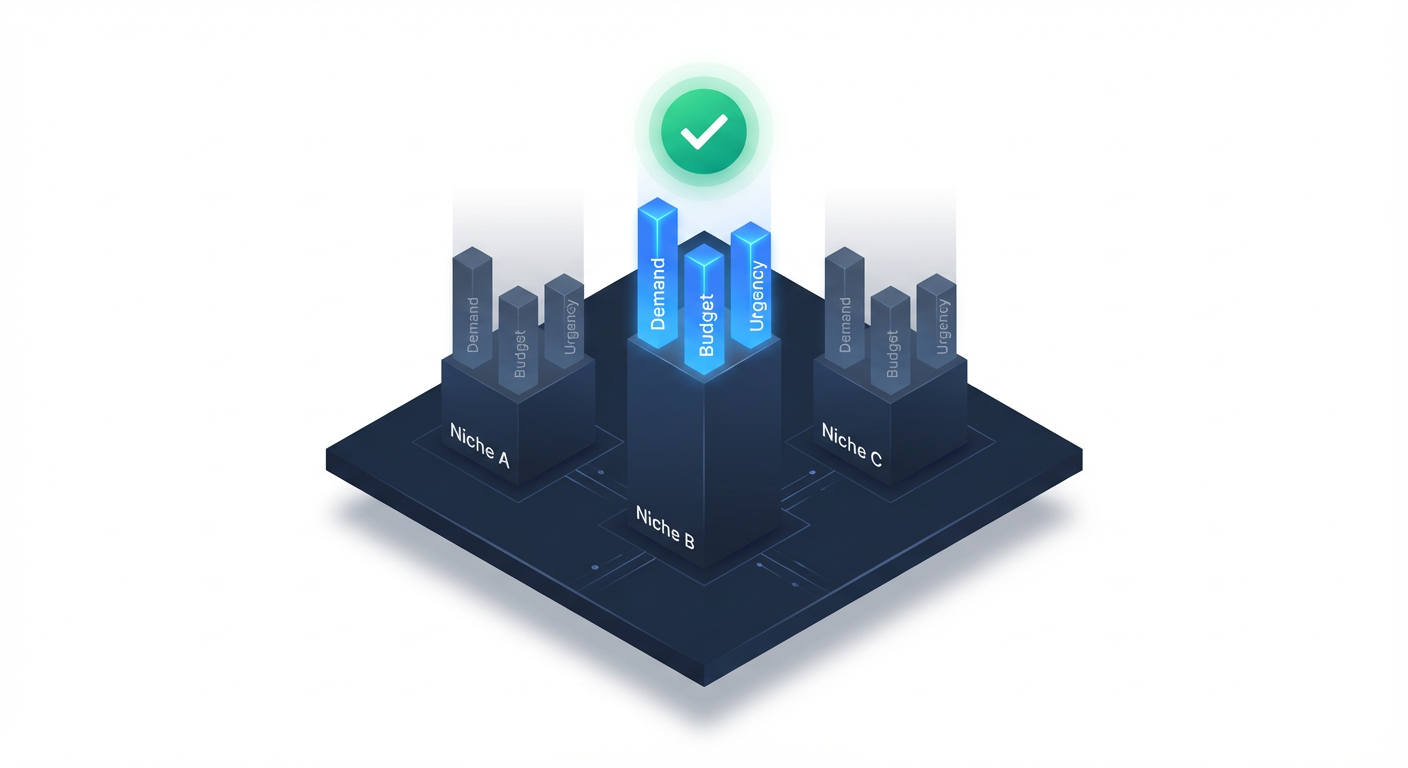
Stop guessing which industry is "hot." Relying on gut feeling is gambling. Instead, we use a quantitative framework to score potential niches. We call this the D.U.B.D.I. Model.
When evaluating a potential niche (e.g., "Chatbots for Real Estate Agents" or "Content Automation for SEO Agencies"), score them from 1-5 on these five criteria:
| Criteria | Question to Ask | Why It Matters |
|---|---|---|
| Demand | Is this audience already looking for automation or efficiency? | You want to capture existing momentum, not educate a market from scratch. |
| Urgency | Is the problem they face "annoying" or "bleeding neck"? | People pay to stop the pain immediately. They procrastinate on "nice-to-haves." |
| Budget | Does this buyer casually spend $3,000-$5,000 on business growth? | Avoid low-margin businesses (e.g., local cafes) that view $500 as a major expense. |
| Data Access | Is the data required for the AI accessible via API or simple export? | If the data is locked in legacy on-premise systems, the technical complexity will kill your margins. |
| Implementation | Can you build a Minimum Viable Product (MVP) in less than 2 weeks? | Speed to delivery is your competitive advantage. Don't pick problems that require 6 months of R&D. |
Pro Tip: Look for "Data Rich, Time Poor" industries. Recruitment agencies, for example, are drowning in resumes (Data Rich) and spending hours screening them (Time Poor). That is a perfect storm for an AI automation offer.
The Positioning Statement: Your "One-Outcome" Offer
Once you have identified a high-scoring niche, you need to articulate your value without using buzzwords. Clients do not care about "Large Language Models" or "Vector Databases." They care about the result.
We use the XYZ Formula: I help [X] achieve [Y] by [Z].
- X = Specific Avatar: Not "Businesses," but "High-Volume Shopify Stores."
- Y = Tangible Outcome: Not "save time," but "reduce support ticket volume by 60%."
- Z = The Mechanism: This is where you mention AI/Automation.
The Evolution of an Offer:
- Weak: "I run an AI agency for marketing." (Too vague, no promise).
- Better: "I build chatbots for e-commerce sites." (Commoditized, sounds like a cheap freelance gig).
- Winning: "I help Shopify owners recover 15% of abandoned carts automatically using personalized AI SMS agents." (Specific, measurable, high ROI).
Key Insight: Your mechanism (the AI) is interesting to you, but irrelevant to the client until they know what it buys them. Sell the destination, not the plane.
The "Conversation Starter": Your Lightweight Asset
You do not need a complex website with a blog, an "About Us" page, and a mission statement. In fact, building that now is just procrastination disguised as work.
To win your first $5k-$10k deal, you only need a One-Page Offer Site or a clean PDF deck. This asset has one job: to prove you understand the problem better than the client does.
Structure of the One-Pager:
- The Hook: A headline that calls out the avatar and the pain (e.g., "Stop Wasting 10 Hours a Week Qualifying Leads That Never Buy").
- The Agitation: Describe their current hell. "You are manually copying data from emails to spreadsheets. You're missing follow-ups. You're burning out.""
- The Solution (Your Mechanism): Briefly explain how you fix it. "We install a custom AI agent that reads your inbox, qualifies leads based on your criteria, and books meetings."
- The Evidence (The Credibility Kit): This is where most people get stuck. "But I don't have clients yet!"
How to Build Credibility Without Clients You don't need past clients to have a portfolio. You need Spec Work.
- Build the solution you want to sell for a hypothetical client.
- Record a Loom video walking through the workflow: "Here's the raw data, here's the AI processing it, and here's the final output.""
- Embed this video on your one-pager.
Seeing the tech actually work is 10x more powerful than a testimonial from a stranger. It proves competence.
Validating with the "Soft Ask"
Before you spend weeks building the backend, you must validate the offer. You do this with a "Soft Ask" outreach strategy. You aren't asking for money; you're asking for feedback on the mechanism.
The Script: "Hey [Name], I'm building an internal tool for [Niche] that automates [Pain Point]. I'm looking for 3 people to test it out for free in exchange for feedback. Would you be open to seeing a 2-minute demo to see if it would be useful for your workflow?"
If nobody wants to see it for free, they definitely won't pay for it. If they say yes, you have a foot in the door to upsell the full implementation later.
What You'll Build On:
This positioning work is the foundation for the rest of the 60-day sprint.
- In Section 3 (Technical Implementation): We will take the specific "Mechanism" you defined here and build it live using no-code stacks (Make.com, OpenAI API) that require zero senior-dev experience.
- In Section 4 (Sales & Outreach): We will take your XYZ Positioning Statement and turn it into a high-conversion cold email and LinkedIn campaign.
- In Section 5 (Delivery): We will convert your "Spec Work" demo into a deployable client asset.
- In Section 6 (Scaling): We will show you how to productize this single offer so you can sell it to 10 clients without working 10x harder.
Moving Forward
You now have a target (Niche), a promise (Offer), and a scorecard to ensure you aren't walking into a dead end.
Do not spend more than 48 hours on this phase. Perfectionism is the enemy of profit. Pick a niche that scores a 4 or 5 out of 5, build your one-pager, and prepare to build.
In the full course, we provide deep-dive video walkthroughs of three specific "Golden Niches" that are working right now, along with the exact copy-paste templates for the One-Page Offer site. But for now, your job is to make a decision.
The market rewards action, not contemplation. Let's get to work.
Course Details
- Sections8 sections
- Price$9.99